
The Environmental Impact: Why Timber Homes Are the Sustainable Choice
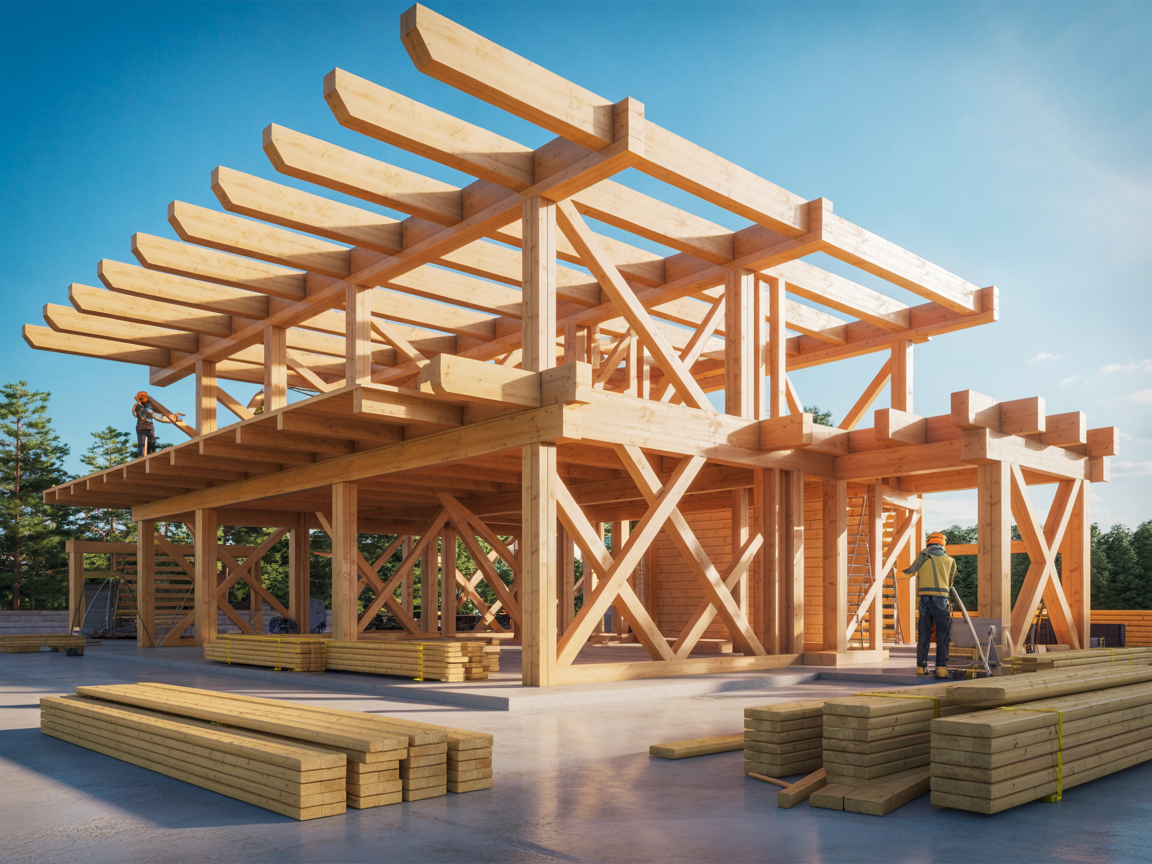
Climate change is driving a fundamental rethinking of how we build. Timber frame construction is emerging as one of the most sustainable building methods available. Here’s why.
Carbon Storage
Every cubic meter of timber used in construction stores approximately one ton of CO₂. A typical timber frame home stores 20–40 tons of carbon that would otherwise be in the atmosphere. When you choose timber, your home becomes a carbon sink, actively contributing to climate solutions.
Renewable Resource
Unlike concrete, steel, or brick, timber is a renewable resource. Sustainably managed forests regrow the timber harvested for construction, creating a virtuous cycle. For every tree we use, multiple new ones are planted.
Low Embodied Energy
The energy required to process timber into building materials is a fraction of what’s needed for concrete or steel. Manufacturing a cubic meter of timber requires about 8 MJ of energy, compared to 240 MJ for steel and 38 MJ for concrete.
Reduced Construction Waste
Prefabricated timber frame construction generates significantly less waste than traditional building methods. Components are precision-cut in factory settings, minimizing off-cuts and material waste on site.
End-of-Life Recyclability
Timber is naturally biodegradable and recyclable. At the end of a timber structure’s life (which can be centuries), the wood can be repurposed, recycled into new products, or returned to the earth without leaving toxic residues.
Ready to Build Your Dream Home?
Get a free, no-obligation consultation with our team.
Get a Free Consultation